Reviewed by Sahil Chopra, MD.
Research by Savit Malhotra
Introduction
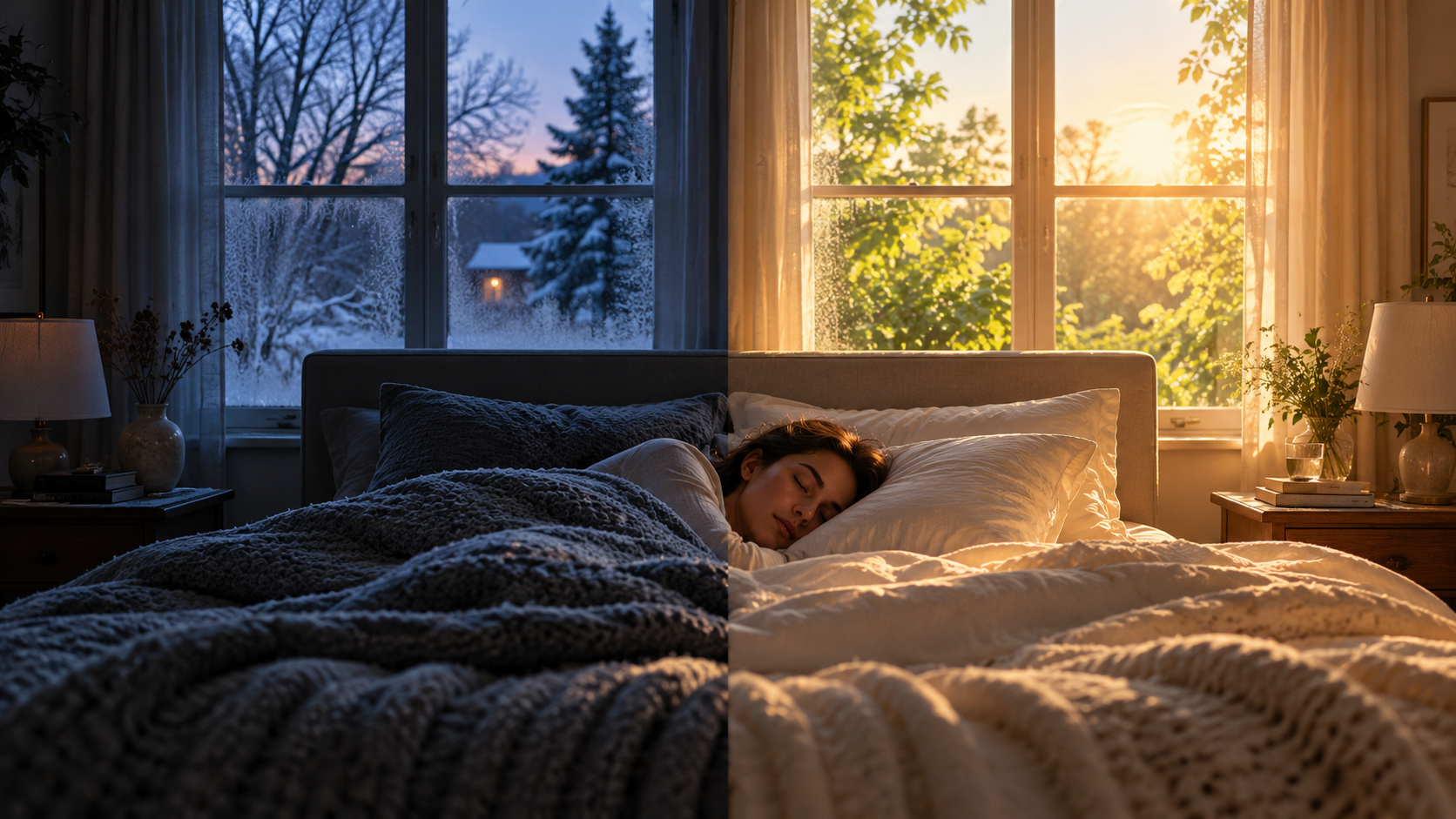
When we think about creating a good environment for sleep, we usually focus on keeping the bedroom cool, dark, and quiet. But there is another part of the sleep environment that is much harder to see: the air itself. A bedroom may feel perfectly comfortable when you first get into bed, yet after several hours with the windows and door closed, carbon dioxide (CO₂), humidity, and pollutants generated indoors can gradually accumulate. Research increasingly suggests that bedroom air quality, including ventilation, particulate matter, temperature, humidity, and CO₂, is associated with how efficiently and deeply we sleep.[1,2,3,4,5,6,7] The relationship is complicated, however. More ventilation is not automatically better, and simply opening a window can sometimes introduce heat, noise, pollen, or outdoor pollution. Understanding those tradeoffs may help explain why the best sleep environment is about more than just a comfortable mattress.
What Happens to Bedroom Air While You Sleep?
A bedroom is unusual compared with many other rooms because we may spend seven or eight continuous hours in the same enclosed space. During that time, the people in the room continuously exhale carbon dioxide and water vapor. Building materials, furniture, cleaning products, fragrances, pets, and outdoor air can contribute additional particles or gases. If there is little air exchange with the rest of the home or outdoors, concentrations of some of these substances can rise throughout the night.[2,11,13]
Ventilation helps by replacing or mixing indoor air with cleaner outdoor air. This can happen naturally through open windows and doors or mechanically through a ventilation or HVAC system. The U.S. Environmental Protection Agency describes three main strategies for improving indoor air quality: controlling pollution at its source, improving ventilation, and using air cleaning or filtration when appropriate.[15] Importantly, these methods do different things. Ventilation exchanges air. Filtration removes certain pollutants from air already inside the room. Source control prevents pollutants from entering the air in the first place. That distinction becomes especially important when talking about carbon dioxide.
What Does CO2 in the Bedroom Actually Mean?
Every time we breathe out, we release CO₂. Put one or two people in a relatively small bedroom for an entire night with limited ventilation, and the concentration will naturally increase. That does not mean a bedroom with an elevated CO₂ reading is suddenly toxic. At the concentrations commonly encountered in occupied buildings, researchers and professional organizations generally use occupant-generated CO₂ primarily as an indicator of how much outdoor ventilation a space is receiving relative to the number of people inside it.[11,12] If CO₂ steadily rises overnight, it often indicates that exhaled air is not being diluted very quickly. Other pollutants produced indoors may therefore be accumulating at the same time.
You may have heard that indoor CO₂ should always remain below 1,000 parts per million (ppm). The science is more complicated. A 2024 review identified 43 CO₂-based indoor-air guidelines around the world and found that 1,000 ppm was the most common limit, but also concluded that there is no scientific basis for applying one universal CO₂ cutoff to every type of building and situation.[11] ASHRAE's current position similarly cautions that indoor CO₂ is not an overall measure of indoor air quality, and that evidence for direct health, performance, and sleep effects from CO₂ at commonly encountered indoor levels remains inconsistent.[12] So why do sleep studies keep finding associations between CO₂ and sleep? One possibility is that CO₂ is partly acting as a marker for ventilation. A poorly ventilated room may contain not only more occupant-generated CO₂, but also more humidity, odors, volatile organic compounds, and other pollutants. When researchers improve ventilation and CO₂ falls, several aspects of the environment may improve simultaneously. This makes it difficult to say that CO₂ itself is solely responsible for changes in sleep.[2,4,5,11]
Can Better Ventilation Actually Improve Sleep?
Some of the most interesting evidence comes from experiments in which researchers deliberately changed bedroom ventilation. In a 2016 randomized field study, researchers studied university students sleeping in their normal dormitory bedrooms under different ventilation conditions.[2] In one experiment, average bedroom CO₂ concentrations were approximately 2,585 ppm under lower ventilation and 660 ppm when ventilation was improved. In another, the corresponding averages were about 2,395 and 835 ppm. When ventilation was greater and CO₂ was lower, objectively measured sleep quality improved, participants reported feeling less sleepy and better able to concentrate the following day, and performance on a logical-thinking task improved.[2] Those were small studies, 14 participants in one experiment and 16 in the other, so the exact numbers should not be generalized to everyone. Nevertheless, later field research has produced similar findings.
In 2022, researchers monitored indoor air and sleep for two weeks in 40 Danish bedrooms.[4] Participants changed whether their bedroom windows or doors were open during the second week. Among bedrooms where the intervention meaningfully changed CO₂ levels, opening the window improved perceived indoor air quality and reduced measured CO₂, volatile organic compounds, and PM10. Participants also slept longer and reported better sleep quality. Interestingly, simply opening the bedroom door lowered CO₂ but did not produce the same improvements.[4] This suggests that the relationship may involve more than one individual pollutant.
A 2023 single-blind study went a step further by secretly changing the speed of mechanical bedroom ventilation systems so participants did not know which ventilation condition they were experiencing.[5] Under lower-ventilation conditions, CO₂ and relative humidity increased. In bedrooms where the intervention produced clear differences in ventilation, participants experienced less deep sleep and more light sleep or awakenings at lower ventilation rates. The authors concluded that the results supported a beneficial effect of increasing bedroom ventilation while also calling for larger studies.[5] Together, these studies provide evidence that adequate bedroom ventilation may support sleep, but they do not establish one perfect ventilation rate or CO₂ number that applies to every bedroom.
The Bedroom Environment Is More Than CO2
One of the challenges with studying air quality and sleep is that environmental factors rarely occur in isolation. A 2023 study illustrates this particularly well. Researchers continuously measured PM2.5, CO₂, temperature, humidity, barometric pressure, and noise for 14 nights in the bedrooms of 62 adults while participants wore sleep-tracking actigraphs.[7] Sleep efficiency decreased in a dose-dependent manner as PM2.5, temperature, CO₂, and noise increased. Compared with the lowest exposure groups, sleep efficiency in the highest exposure groups was approximately 3.2% lower for PM2.5, 3.4% lower for temperature, 4.0% lower for CO₂, and 4.7% lower for noise.[7]
That does not mean each factor caused precisely that amount of sleep loss. The study was observational, and real bedrooms contain many environmental and behavioral differences that are difficult to separate. But it emphasizes an important idea: sleeping well may depend on the entire bedroom environment rather than one isolated measurement. Research from Shanghai reached a similar conclusion. In 41 households monitored during summer, higher bedroom temperature and CO₂ concentrations were associated with less slow-wave sleep, while greater noise was associated with lower sleep efficiency.[6] The findings reinforce why ventilation decisions need to consider temperature and sound in addition to air exchange.[6]
Why Opening the Window Isn’t Always the Answer
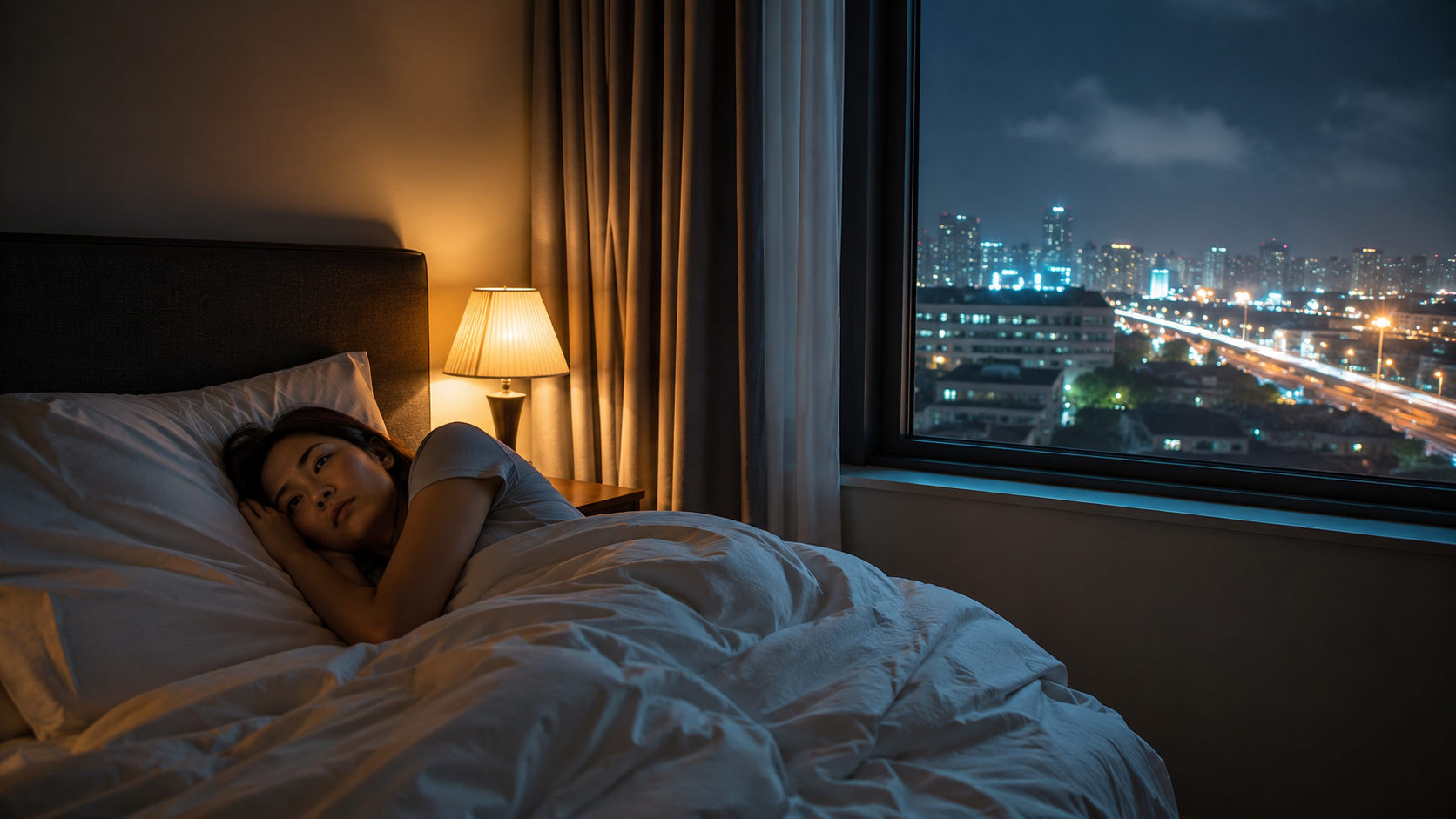
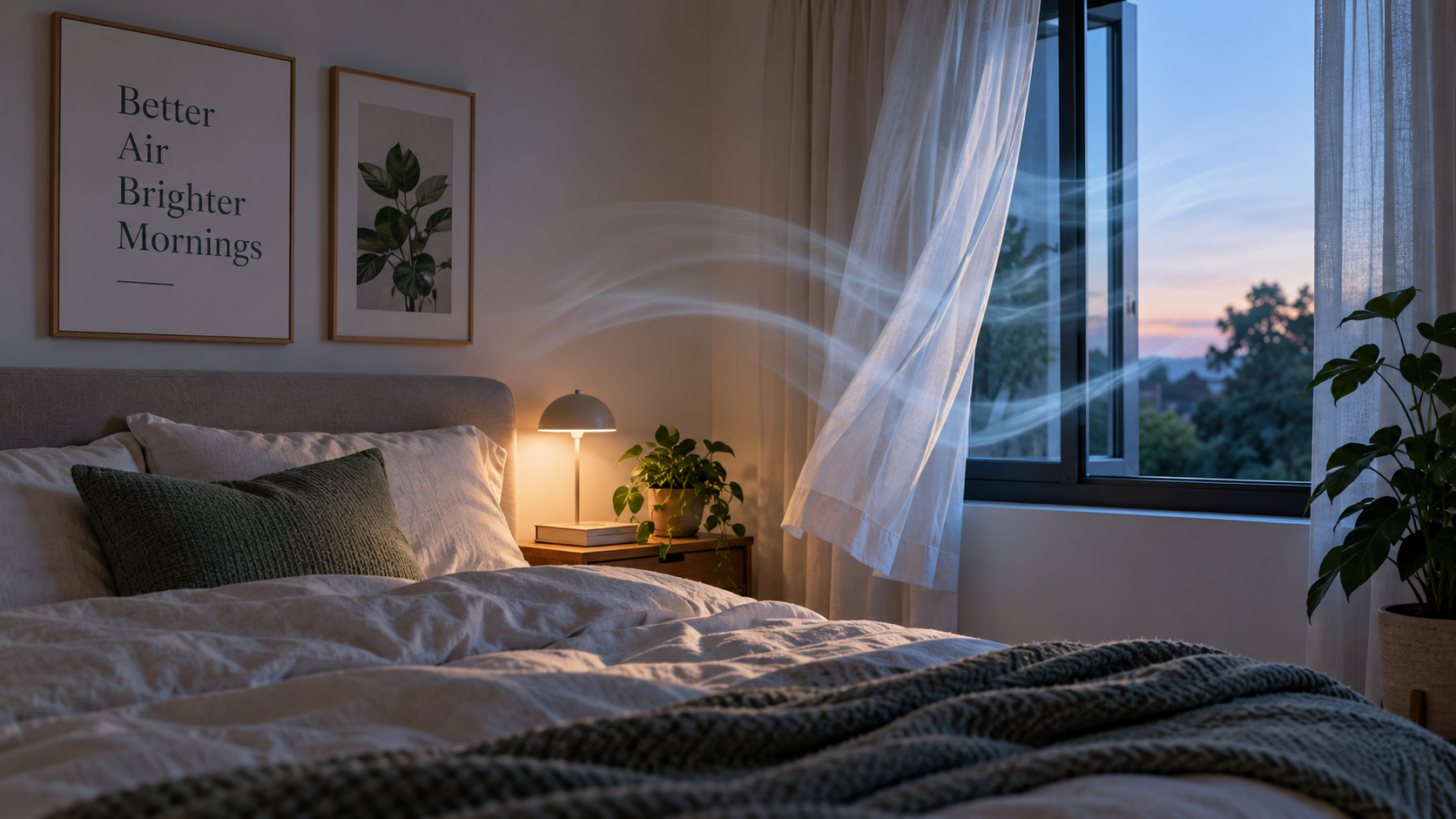
If ventilation can help, it might seem that the simplest recommendation is to sleep with the window open. Unfortunately, the outside environment sometimes makes that a poor trade. A 2024 field intervention study examined 50 bedrooms during summer in densely populated Shanghai.[8] Opening windows successfully lowered indoor CO₂, but it also increased bedroom temperature, PM2.5, and perceived noise. REM sleep duration was lower with windows open, and researchers did not find significant improvement in the other major sleep-quality measures. The authors concluded that window opening should not be treated as a universal solution for improving bedroom ventilation.[8]
This connects several topics from this environmental sleep series. If you live beside a busy road, opening the window may introduce traffic noise and particulate pollution. During wildfire smoke, outdoor PM2.5 may be far worse than indoor air. During allergy season, an open window can allow pollen indoors. On hot, humid nights, ventilation can even make the bedroom warmer or more humid. The EPA therefore recommends increasing outdoor ventilation when outdoor conditions allow, while specifically cautioning that outdoor pollution sources should be considered before bringing more outdoor air inside.[15] In other words, “fresh air” is helpful only when the air being brought inside is actually an improvement.
What About Humidity?
Humidity is another environmental factor that can easily change overnight. People release moisture through breathing and perspiration, and humidity can rise when ventilation is limited. The relationship between humidity and sleep does not appear to be as simple as “lower is better.” In a 2025 winter field study involving 104 older adults and 507 person-nights, researchers found that both relatively low and high humidity were associated with poorer sleep, while higher CO₂ concentrations were also associated with worse sleep quality.[9] Low humidity appeared to amplify the association between elevated CO₂ and poor sleep.[9]
A separate laboratory study in older adults compared different combinations of relative humidity and CO₂ and similarly found poorer sleep at both 40% and 80% relative humidity compared with 60%, particularly when higher CO₂ was combined with lower humidity.[10] Because these experiments focused on older adults under specific conditions, the exact optimum should not be turned into a universal rule for every sleeper.[10] From a broader indoor-air perspective, excessive moisture also creates another concern: mold. The World Health Organization concludes that persistent indoor dampness and mold are associated with increased respiratory symptoms, allergies, asthma, and respiratory infections and recommends preventing persistent dampness and microbial growth.[14] EPA guidance generally recommends keeping indoor humidity below 60%, and ideally around 30-50%, particularly to limit moisture-related indoor-air problems.[15] This recommendation is primarily about indoor-air quality and moisture control rather than defining a perfect humidity for sleep.
What Else Could Be in Your Bedroom Air?
Bedrooms contain many potential sources of indoor pollutants. Fine particles can enter from outdoor traffic, wildfire smoke, cooking elsewhere in the home, smoking, candles, and other combustion sources. Dust, pollen, pet dander, and mold spores may also accumulate in bedding, carpets, and furniture. Bedrooms can contain volatile organic compounds (VOCs) as well. Paints, adhesives, fragrances, cleaning products, composite wood furniture, mattresses, and other materials can release gaseous chemicals into indoor air. Formaldehyde, for example, can be emitted from certain pressed-wood products, furnishings, adhesives, paints, and consumer products.[13] WHO recommends reducing indoor sources and using ventilation to reduce exposure where appropriate.[13] Importantly, there is much stronger evidence that some of these pollutants affect respiratory and general health than there is evidence that every specific pollutant directly disrupts sleep. It is therefore more accurate to say that good indoor-air management creates a healthier and potentially more sleep-supportive bedroom environment rather than claiming that eliminating a particular VOC will necessarily improve sleep.
Will an Air Purifier Fix a Stuffy Bedroom?
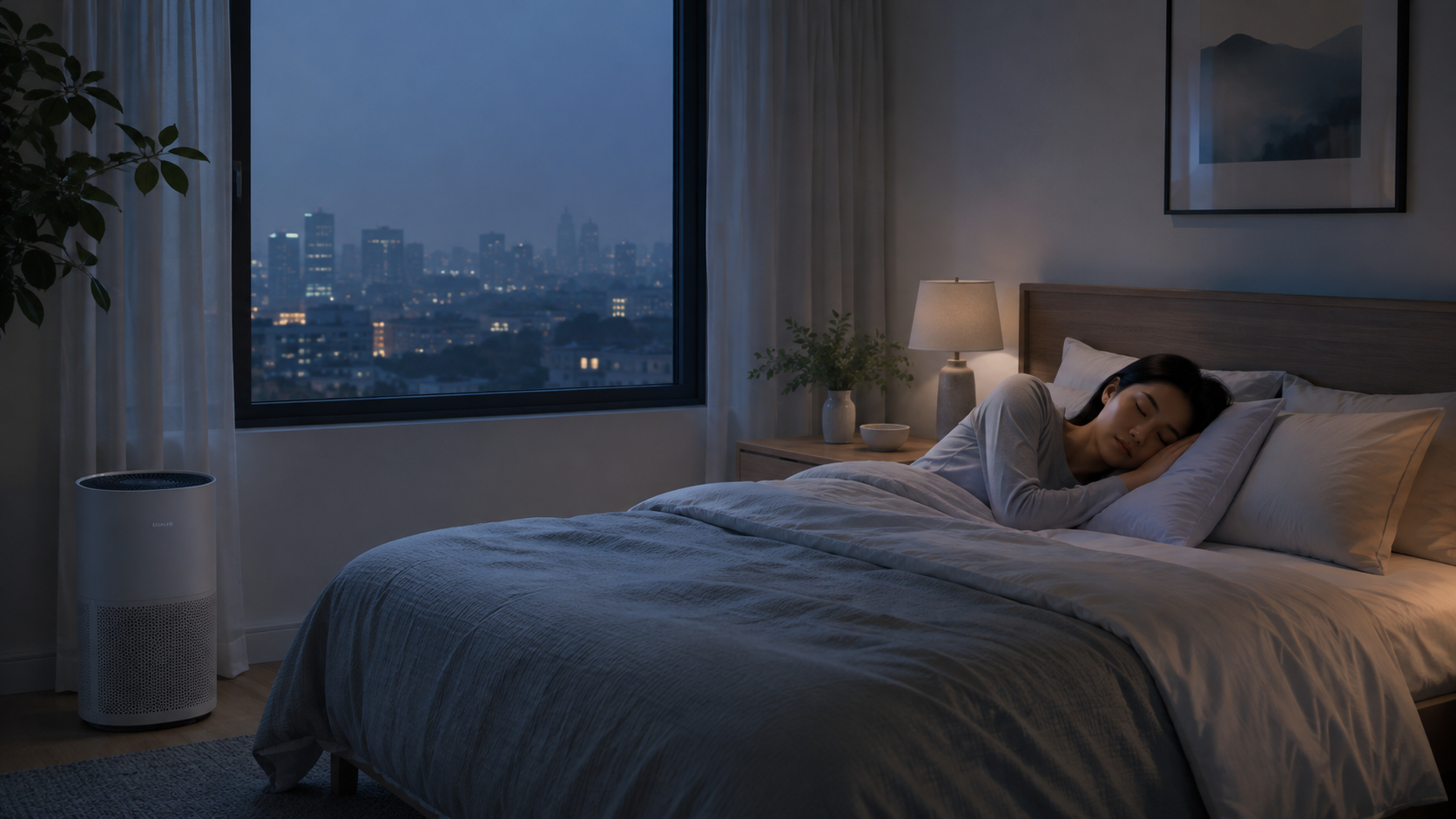
Air purifiers can be useful, but they solve a different problem than ventilation. A properly sized HEPA air cleaner can reduce airborne particles such as PM2.5, pollen, some airborne dust, and particles containing allergens. EPA recommends choosing a unit with a Clean Air Delivery Rate (CADR) appropriate for the room size.[16] Some units also contain activated carbon or other materials designed to capture certain gases, although gas-removal performance varies considerably.[16] What a typical HEPA purifier cannot do is remove the CO₂ that you and anyone sharing the bedroom continually exhale. That requires air exchange or specialized technology, not ordinary particle filtration. Therefore, someone could run an excellent HEPA purifier all night and still see CO₂ steadily climb if the room receives very little fresh air. EPA describes filtration as a supplement to source control and ventilation, rather than a replacement for them.[15,16] There is another sleep-related tradeoff to consider: noise. Air cleaners and ventilation equipment contain fans, and higher airflow settings generally produce more sound. Because nighttime noise itself can disturb sleep, quieter equipment, or equipment that can provide adequate airflow at a tolerable sound level, may be preferable.[1,7]
Should You Buy a Bedroom Air-Quality Monitor?
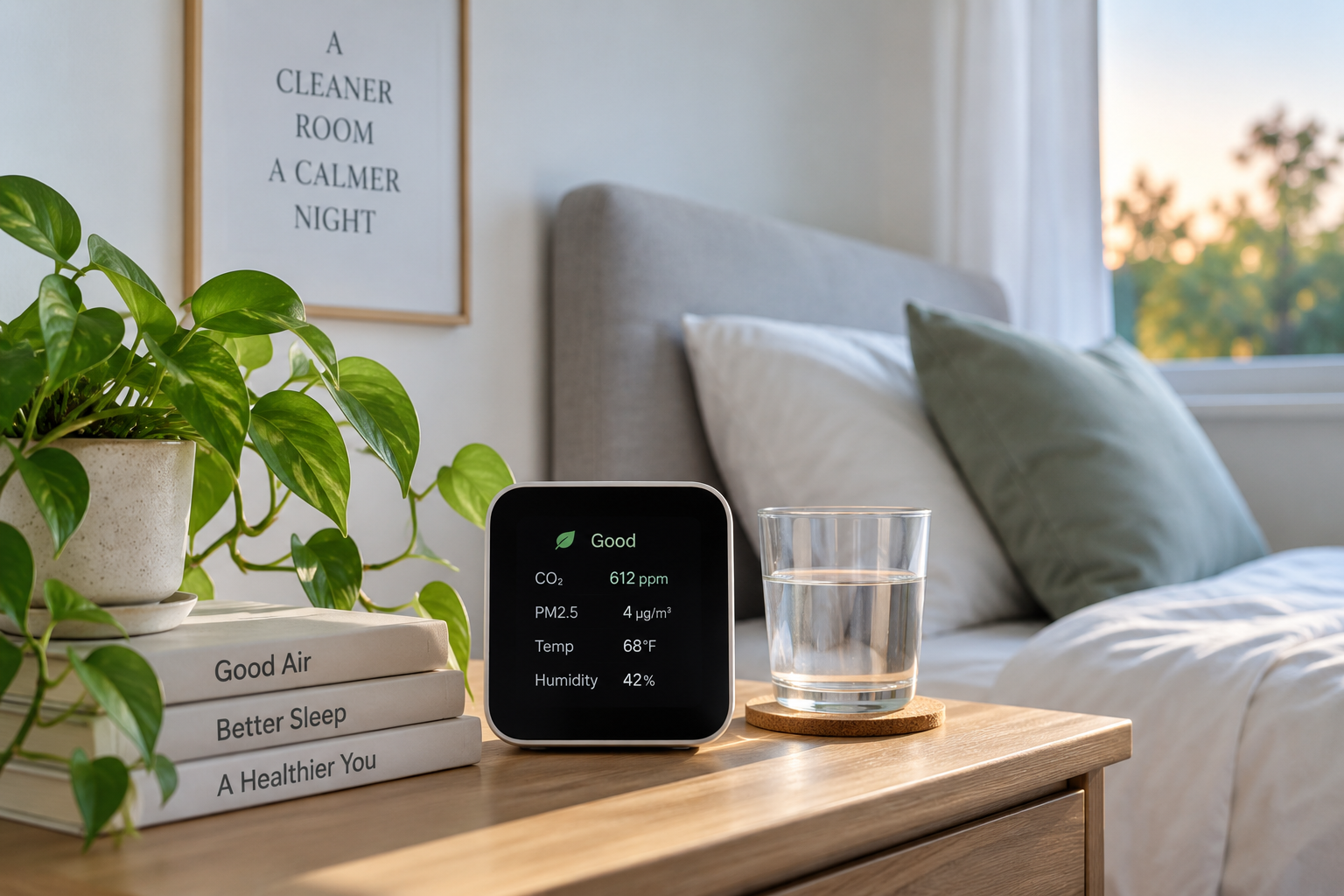
Consumer CO₂, PM2.5, humidity, and temperature monitors have become increasingly common. They can be useful for identifying patterns, but the numbers need to be interpreted carefully. For example, seeing CO₂ rise every night when two people sleep with the door and window closed, and fall substantially on nights when ventilation is increased, may reveal useful information about airflow. Watching humidity remain very high for prolonged periods may point toward a ventilation or moisture problem.
But a consumer CO₂ monitor should not be treated like a medical device or a definitive “sleep-quality meter.” Sensor accuracy varies, room air may not be uniformly mixed, and, as discussed earlier, there is no scientifically justified universal CO₂ value that separates “healthy sleep” from “unhealthy sleep.”[11,12] Trends across several nights are likely to be more useful than becoming concerned about one isolated reading.
How Can You Improve Your Bedroom Air?
The best strategy depends on what is actually causing the problem. If the bedroom feels stuffy and outdoor air is clean, mild, and quiet, increasing ventilation may help. This could involve opening a window, using existing ventilation appropriately, or improving mechanical ventilation. The intervention studies discussed above suggest that increased outdoor-air supply can improve aspects of sleep under the right conditions.[2,4,5] If outdoor air is smoky, heavily polluted, extremely hot, humid, noisy, or full of pollen, opening the window may make the overall sleep environment worse.[8] In those circumstances, keeping windows closed while using appropriate HVAC filtration or a correctly sized portable HEPA cleaner may be preferable for particles.[16]
Inside the bedroom, reducing pollutant sources is equally important. Consider limiting smoke, candles, incense, heavily fragranced products, and unnecessary chemical sprays. Allow newly purchased furniture or recently painted spaces to ventilate appropriately, and address leaks, condensation, or visible mold rather than trying to cover the problem with an air purifier.[13,14,15,16] Temperature, humidity, light, and noise should also be considered together. Reviews of sleep environments consistently emphasize that comfortable thermal conditions, darkness, quiet, and adequate air quality all contribute to a sleep-supportive bedroom.[1,17]
A Bedroom Is an Environment, Not Just a Bed
Perhaps the most interesting lesson from this research is that we tend to think of sleep as something happening inside the body, while overlooking the environment surrounding it. A person can have a comfortable mattress, an eight-hour sleep opportunity, and a perfectly consistent bedtime, and still spend those eight hours in a bedroom that is hot, noisy, poorly ventilated, humid, or full of fine particles.
No single sensor reading or environmental modification guarantees better sleep. The research on bedroom ventilation is still relatively young, many intervention studies have small sample sizes, and results differ across climates and seasons.[2,4,5,8] But the evidence increasingly supports viewing air quality as one component of the sleep environment alongside temperature, light, and noise.
Conclusion
The air in your bedroom may change substantially between the moment you turn off the lights and the moment you wake up. With limited ventilation, CO₂, moisture, and pollutants generated indoors can accumulate through the night. Several field and intervention studies have found that better-ventilated bedrooms are associated with improvements in sleep quality, deep sleep, sleep duration, or next-day functioning.[2,4,5] But the message is not simply “open the window.” The best sleep environment requires balance. Ventilation that lowers CO₂ may also bring in traffic noise, heat, wildfire smoke, or pollen. Air purifiers can reduce particles but cannot replace fresh-air ventilation. Humidity that is too high can contribute to dampness and mold, while very dry conditions can also be uncomfortable.
Instead of focusing on one perfect CO₂ number or one piece of equipment, think of the bedroom as a complete environment: clean enough to breathe comfortably, ventilated when conditions allow, protected from outdoor pollution when they do not, and kept cool, dark, quiet, and dry enough to support sleep. Sometimes a better night's sleep may begin not with a new mattress, but with the air around it.


.png)
.png)