Reviewed by Sahil Chopra, MD.
Research by Savit Malhotra and Quynh Theresa Do.
Introduction
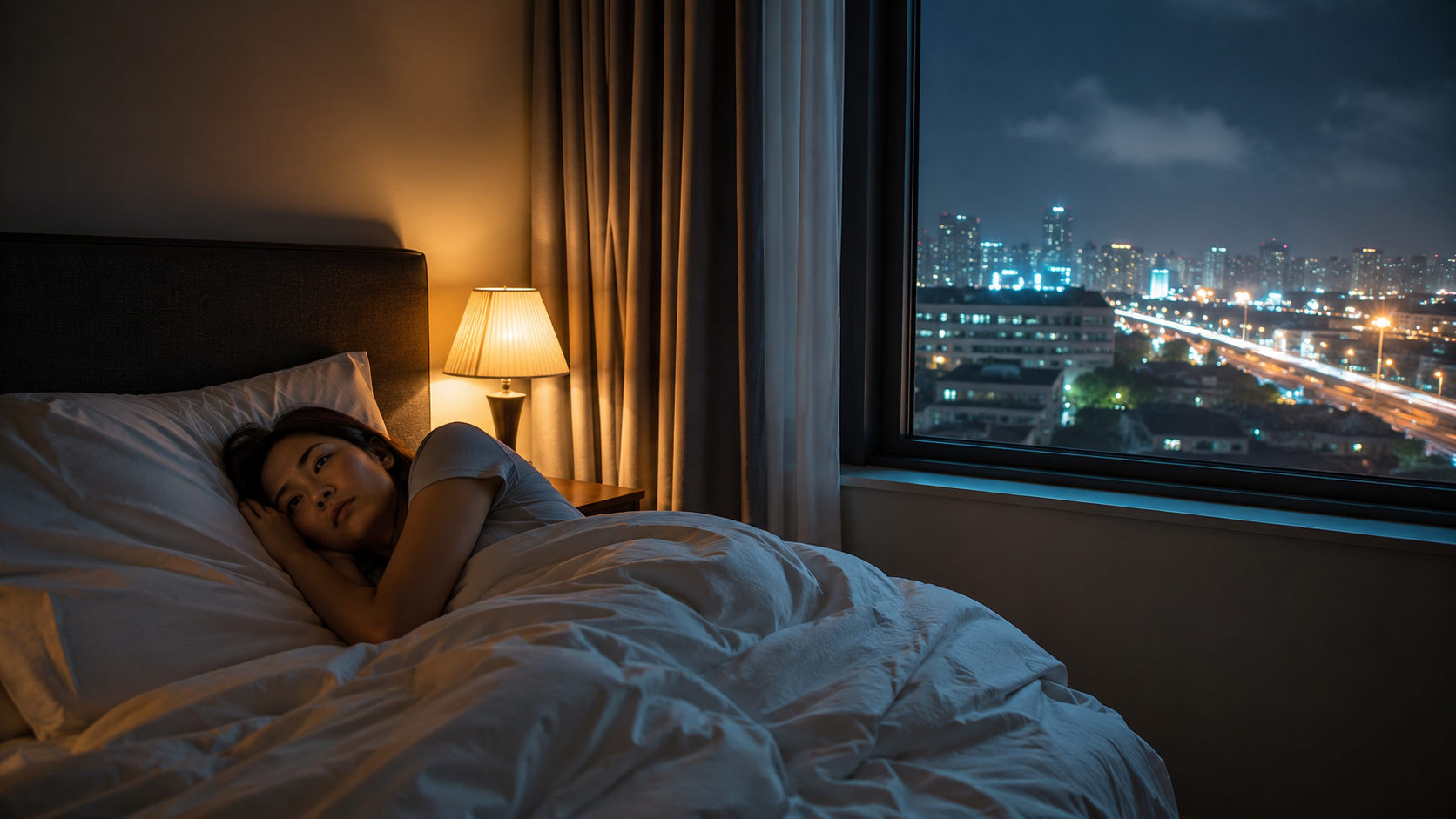
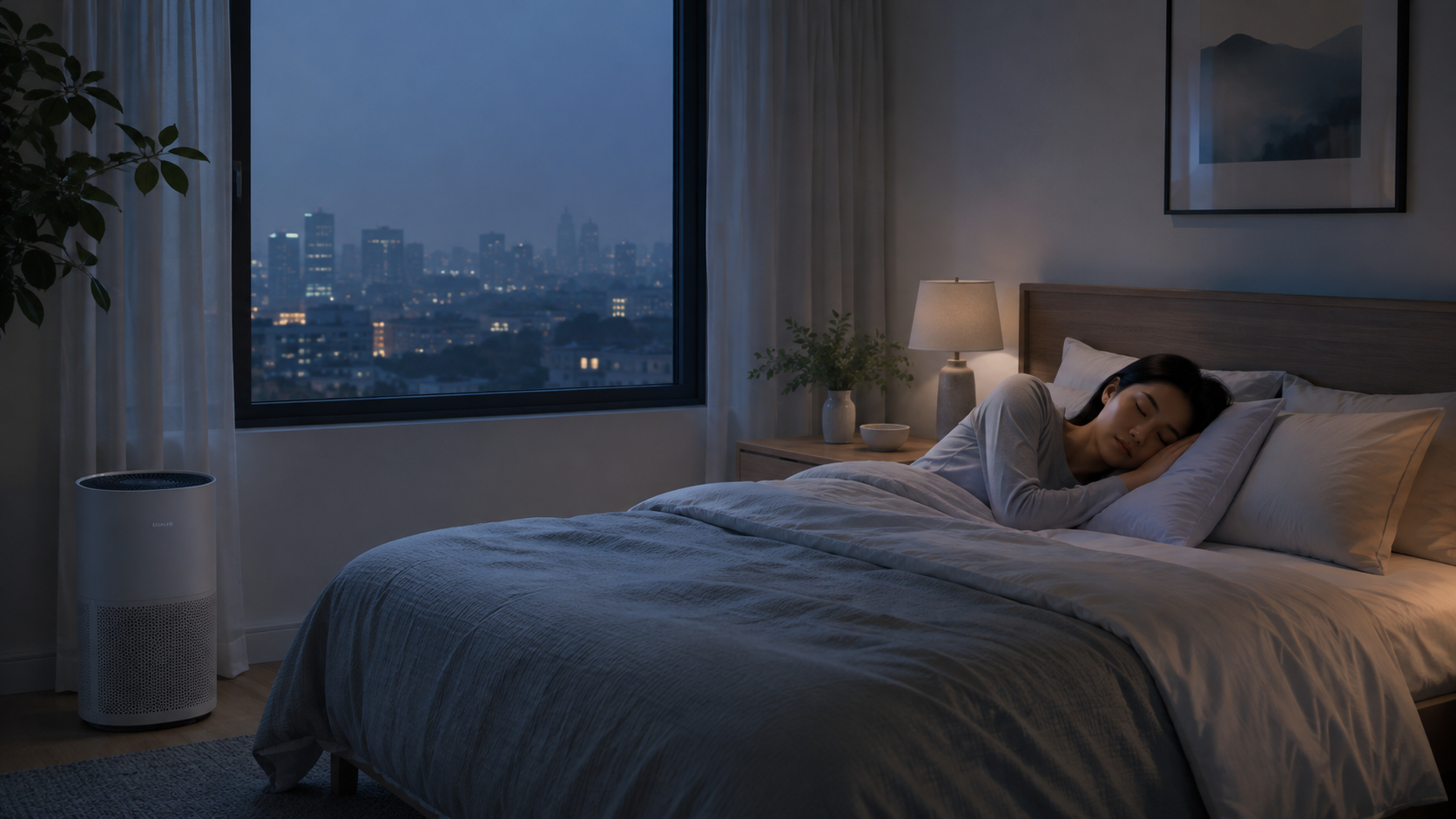
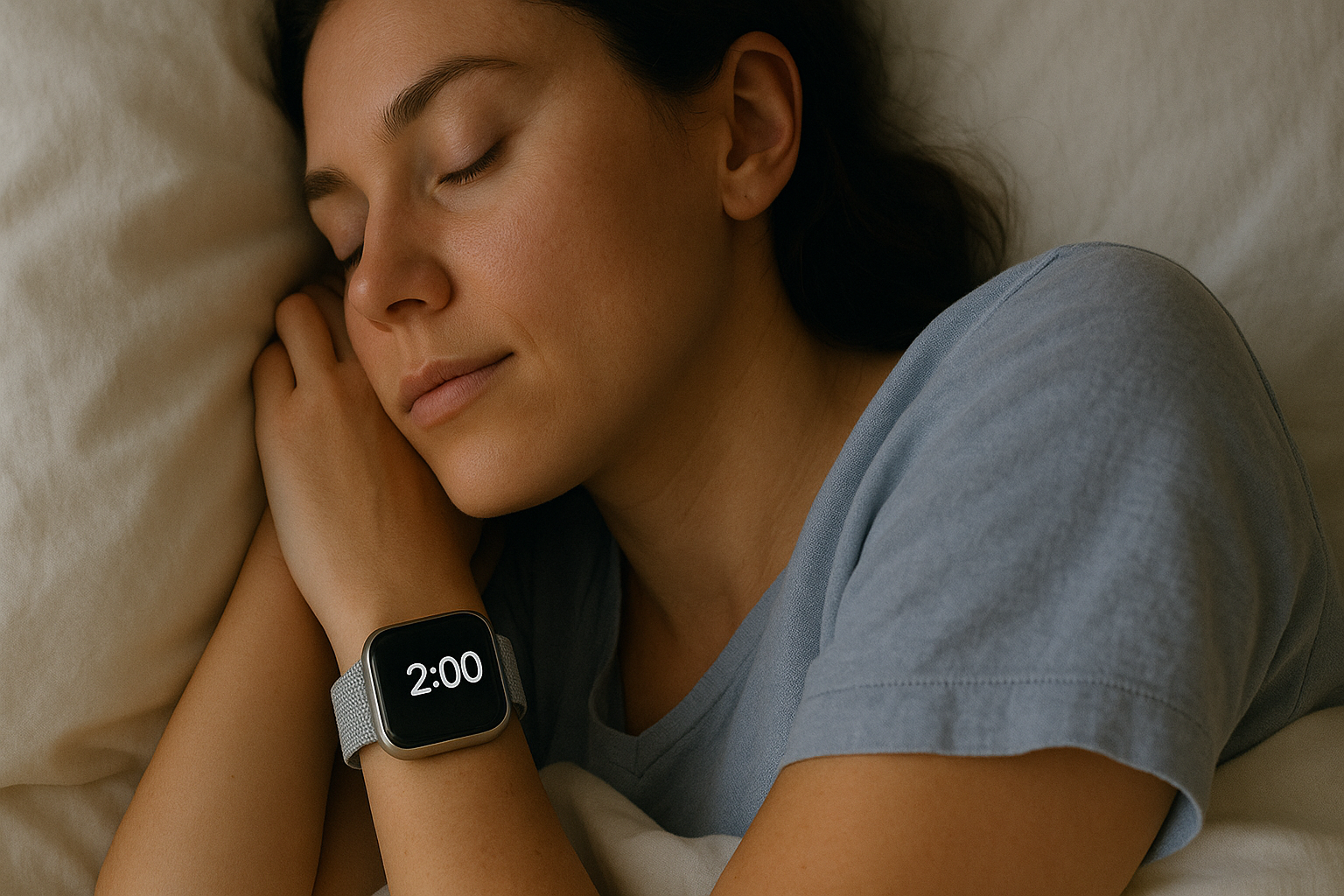
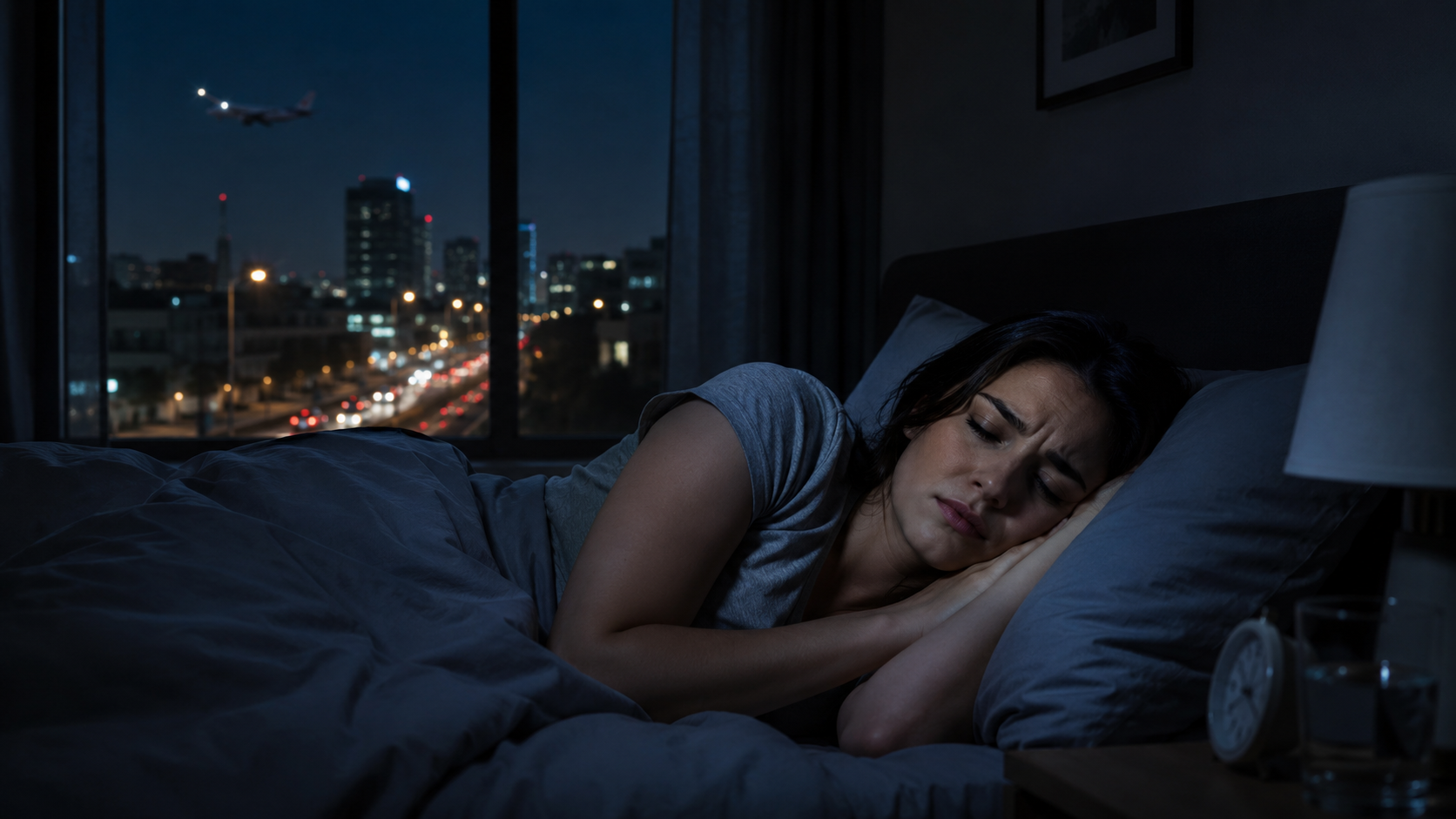
A car horn outside your window. A neighbor’s dog barking. The rumble of an airplane overhead or traffic passing by at 2 a.m. Even when these sounds seem like little more than annoyances, they may be doing more than keeping you awake. Encrionmental noise is increasingly recognized as a public health convern, with transportation, construction, industry, and community activity among its major sources. The World Health Organization (WHO) identifies sleep disturbances as one of the most important consequences of excessive environmental noise, alongside cardiovascular, cognitive, and other health effects.[1] And surprsingly, noise does not necessarily have to fully wake you up to affect your night.
What is Noise Pollution?
Noise pollution generally refers to unwanted or harmful encironmental sound that interferes with normal activities, comfort, or health. In cities and populated areas, road traffic is one of the most common sources, but aircraft, railways, construction, industrial activity, nightlife, and other neighborhood sounds can all contribute.[1] Unlike some environmental exposures, noise can also change dramatically from minute to minute; a quite bedroom may suddenly be interrupted by a motorcycle, passing train, or aiplane.
How loud a sound is matters, but so does when, how often, and how suddenly it occurs. WHO guidelines therefore consider both overall nighttime exposure and specific sources of noise. For example, WHO recommends reducing average nighttime road-traffic noise below 45 dB at night because exposures above this level are associated with adverse effects on sleep.[1] Research also suggests a dose-response relationship: as nighttime transportation noise increases, the likelihood of reporting significant sleep disturbance generally rises.[2] A recent meta-analysis of 68 observational studies similarly found an overall association between environmental noise, particularly traffic noise, and sleep disturbance.[3] Specfically, the study found that three sleep outcomes were associated with noise pollution: poor sleep quality, difficulty falling asleep, and sleep maintenance.
Your Brain Is Still Listening While You Sleep
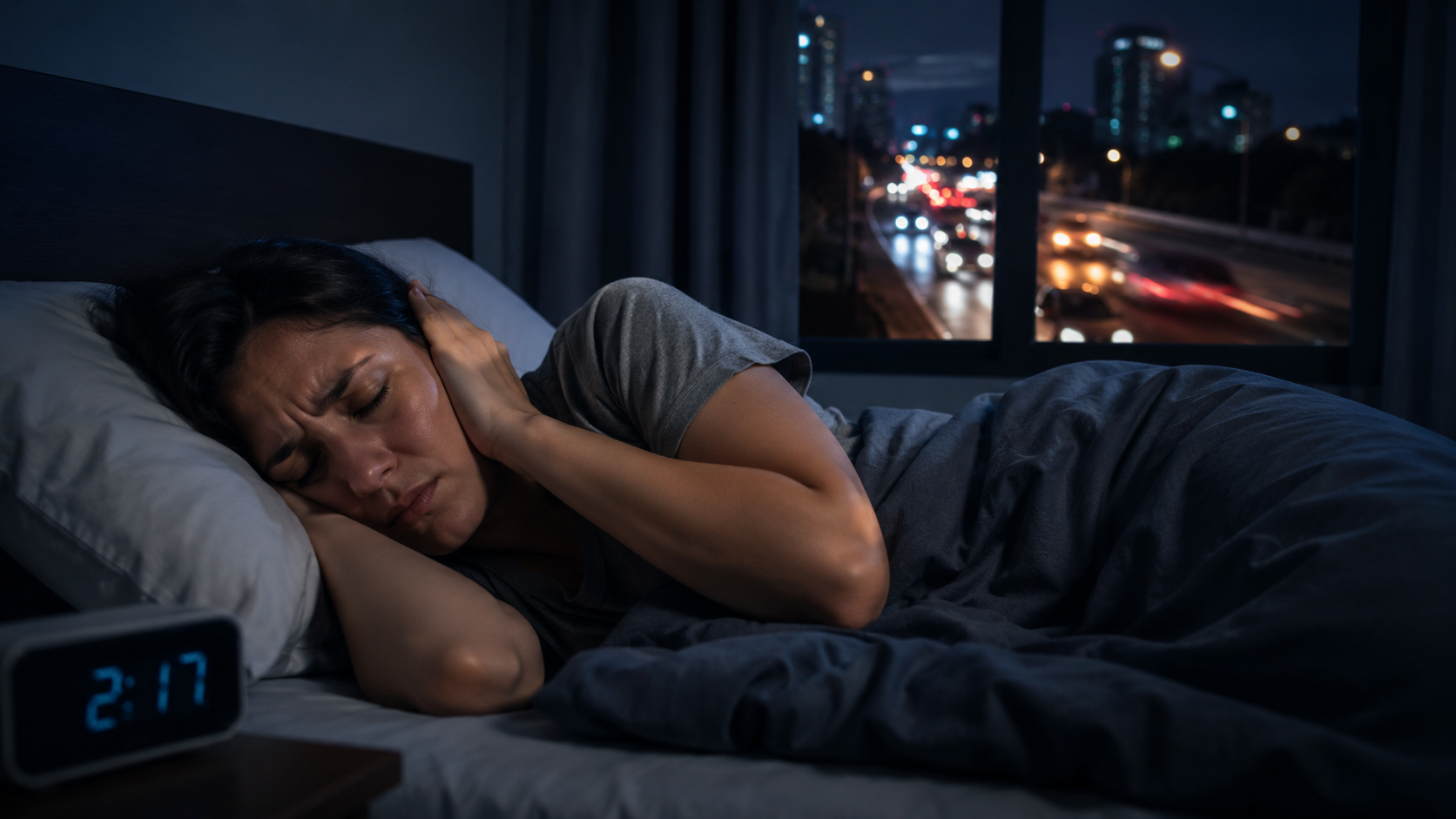
Medical literature has long established that sleep is not a state where the brain is inactive, in fact, it is quite the opposite. The auditory system continues processing sounds during sleep, particularly sounds that are sudden, unfamiliar, or potentially important. Noise can trigger brief changes in brain activity known as cortical arousals, which may last only a few seconds and may never become a full awakening that you remember the next morning.[4] Repeated arousals, however, can make sleep more fragmented and less stable. Studies have found that nighttime transportation noise increases EEG-measured arousals, and intermittent noise events appear to be particularly disruptive.[4] Different sounds can also affect sleep differently depending on their intensity, frequency characteristics, and how quickly the sound becomes loud. This means that two bedrooms with a similar average noise level may not necessarily provide the same sleep environment if one is exposed to frequent sudden bursts of sound.[4]
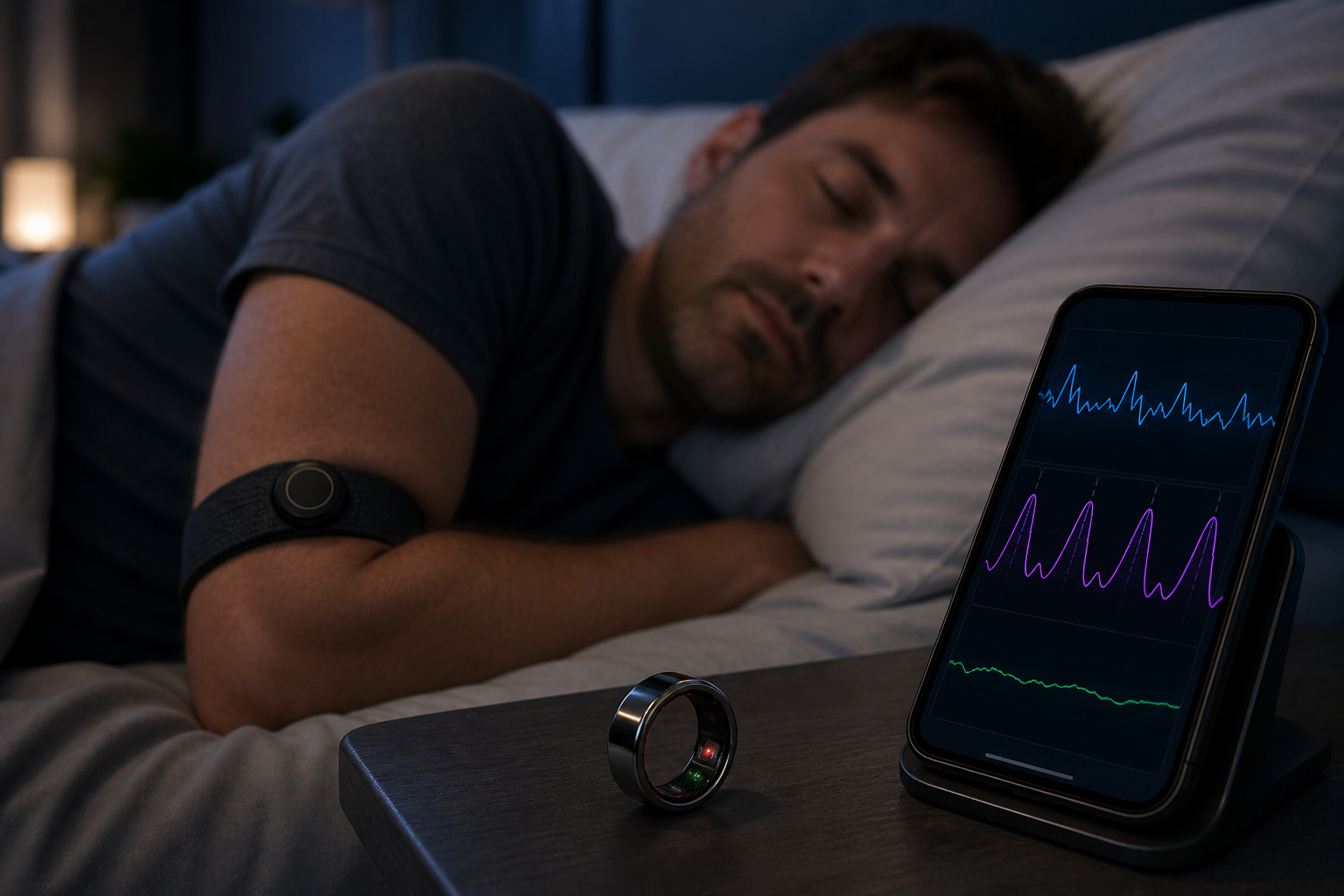
Research also shows that these nighttime responses are not limited to the brain. In one laboratory study, 24 healthy adults were exposed to aircraft, road, and railway noise while researchers continously monitored their sleep and heart activity. Noise events produced measurable increases in heart rate even when participants did not wake up, with the magnitude of the response influenced by factors such as noise intensity, how quickly the sound increased, and the sleep stage in which it occurred.[5] Importantly, these cardiac responses did not appear to disappear as the night progressed, suggesting that the body may not simply “get used to” repeated nighttime noise.[5] Other polysomnography research has similarly found that transportation noise increases EEG arousals and can even alter sleep-spindle activity (brief bursts of brain activity involved in maintaining stable sleep), providing further evidence that encironemntal sounds can subtly disrupt normal sleep physiology even without obvious awakenings.[6]
Noise Can Affect More Than Just Sleep Quality
The effects of nighttime noise may extend beyond simply feeling tired the next day. Even when noise does not cause obvious changes in total sleep time or major sleep stages, the body can still respond physiologically. One controlled study found that intermittent nighttime transportation noise increased autonomic arousals and was associated with increased cortisol levels the following evening, despite relatively little change in conventional measures of sleep structure.[7] In other words, it is possible for the body to react to noise even when a person believes they slept through it.
This stress response may help explain why long-term encrionmetal noise exposure has been associated with cardiovascular problems. Noise can activate stress pathways involving the autonomic nervous system and stress pathways involving the autonomic nervous system and stress hormones, potentially contributing over time to changes in blood pressure, vascular function, inflammation, and metabolic health.[7,8] Observational research has linked chronic environmental noise exposure with hypertension and ischemic heart disease, although noise exposure with hypertension and ischemic heart disease, although noise often occurs alongside other encironmental factors (including air pollution) making these relationships complex.[1,8] Poor and fragmented sleep may therefore be one pathway connecting our nighttime environment with longer-term health.
Turning Down the Volume at Night
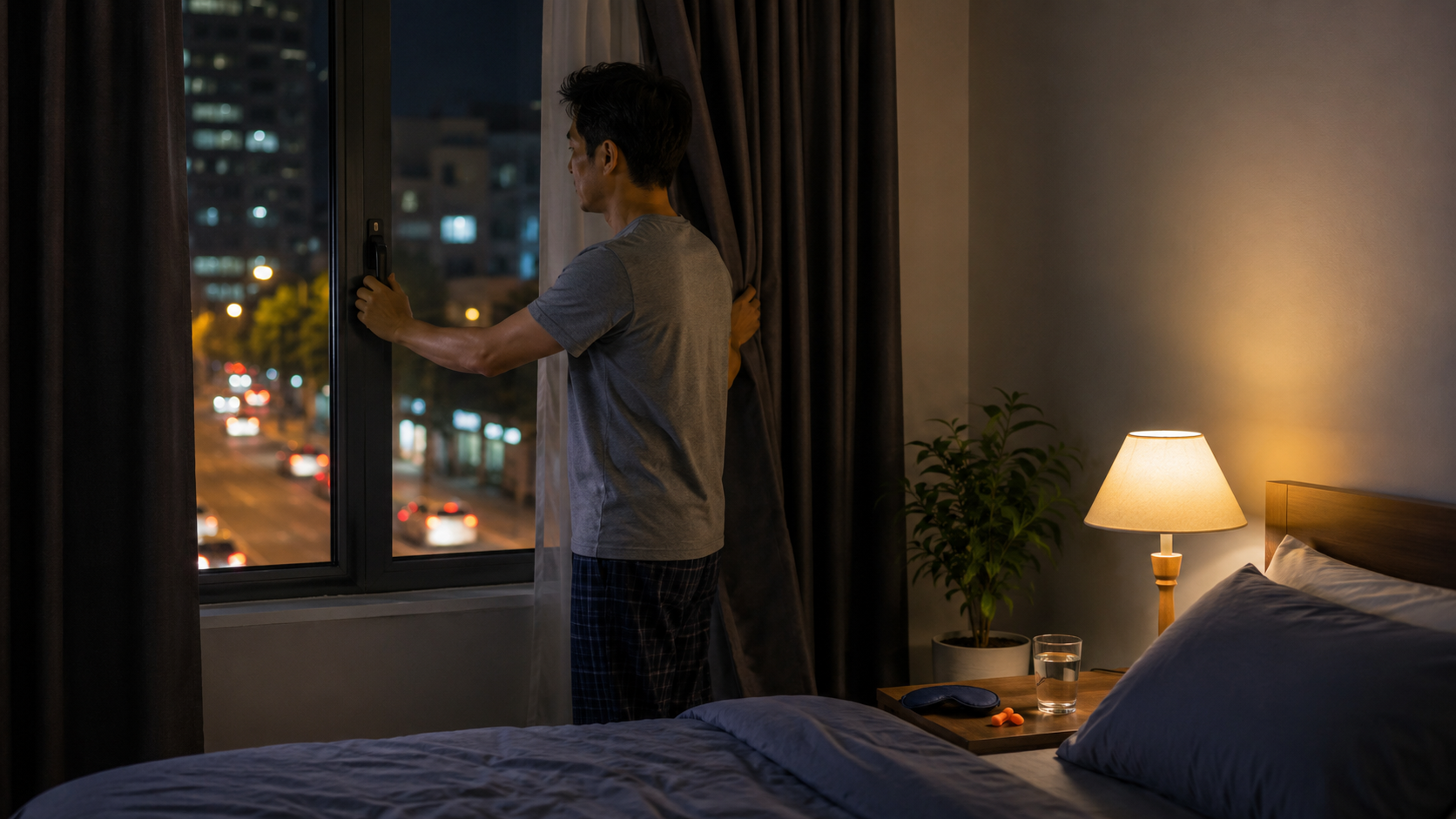
You may not be able to stop the highway, airport (though, some airports do have night flying restrictions specifically to prevent disrupting local residents), or neighbor outside your window, but reducing how much sound reaches the bedroom can help. When possible, start with the source: close windows during particularly noisy periods, seal gaps around windows and doors, and consider heavier curtains or improved window insulation in chronically noisy environments. Moving the bed to a wall farther from the street or selecting the quiestest room in the home for sleeping may also reduce exposure. At the community level, WHO emphasizes reducing noise both at its source and along the path between the source and exposed residents.[1]
Earplugs can also be useful when environmental noise cannot be eliminated. A 2026 controlled laboratory study found that earplugs mitigated nearly all measured sleep effects of intermittent environmental noise at most of the sound levels tested.[9] Interestingly, simply covering unwanted sound with more sound may not always be the answer. In the same study, adding continuous pink noise provided limited protection against environmental noise and actually reduced REM sleep. The researchers cautioned against assuming that broadband sounds such as white or pink noise are universally beneficial for sleep.[9] If you already sleep well with a sound machine, this does not necessarily mean you need to stop using it, but volume and individual response matter, and quiter is not always the same thing as adding another layer of sound.
Conclusion
Noise is easy to dismiss as an inconvenience, especially when we eventuall fall asleep despite it. But sleep is not an on-or-off switch. Your brain and body remain responsive to the environment throughout the night, and traffic, aircraft, trains, construction, or neighborhood noise can trigger arousals and physiological stress responses without necessarily waking you up completely. Over one night, that may mean less restorative sleep; over months or years, chronic noise exposure may become part of a larger environmental health burden. Creating a dark, cool bedroom has long been part of good sleep hygiene, but creating a quiet one deserves a place on that list too.


.png)
.png)