Reviewed by Sahil Chopra, MD.
Research by Savit Malhotra
Introduction
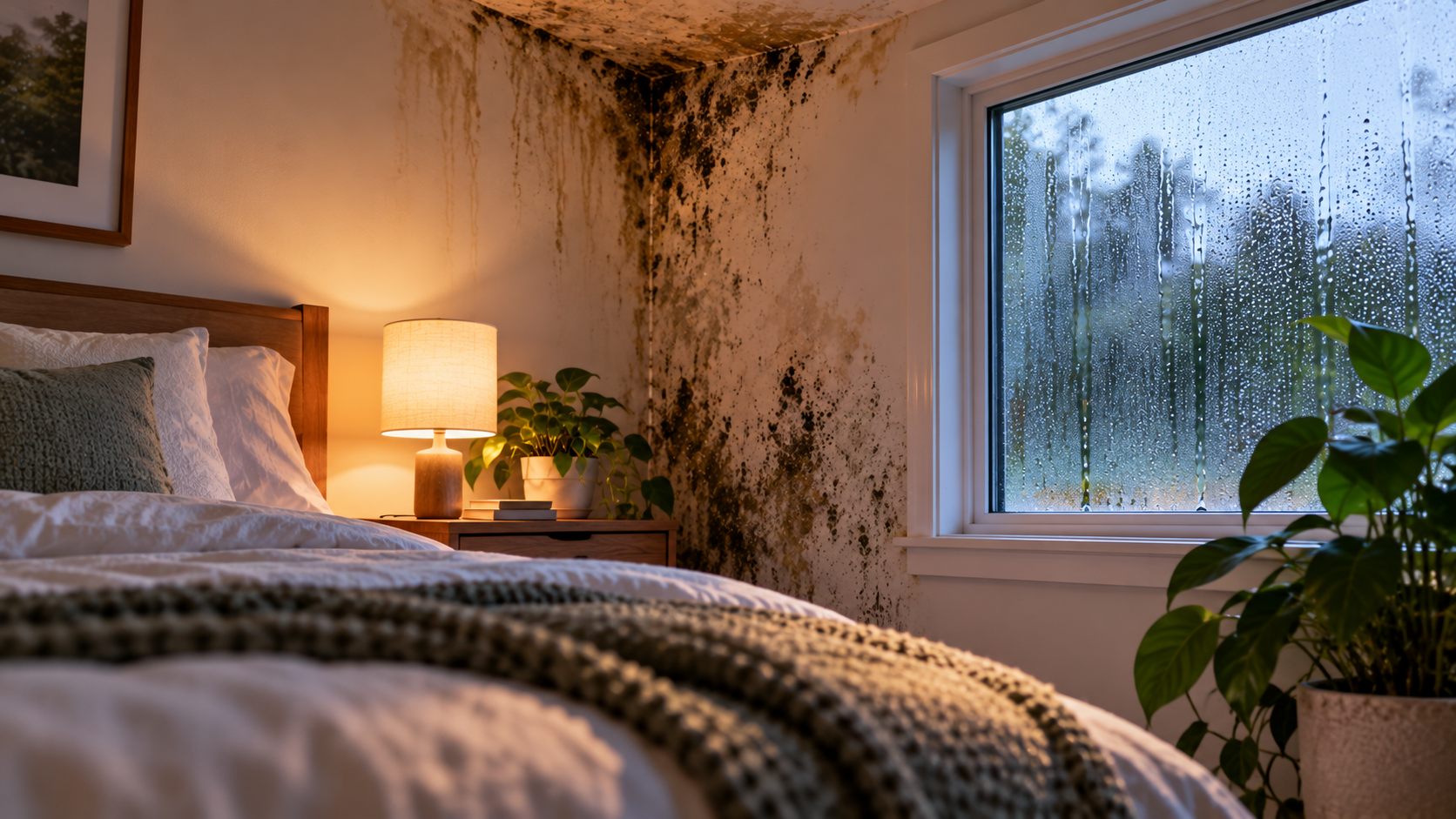
A little moisture in the wrong place can become a much bigger problem than a water stain on the wall. Leaky pipes, roof damage, flooding, condensation, poor ventilation, and persistently high humidity can create the conditions mold needs to grow indoors. Damp and moldy buildings have been associated with respiratory symptoms, allergies, asthma, coughing, and wheezing, making moisture control an important part of maintaining a healthy indoor environment.[1,2]
Sleep may be part of that picture as well. Research has linked living or working in damp environments with insomnia symptoms, snoring, excessive daytime sleepiness, and shorter sleep.[3,4,5,6] The exact mechanism is not always clear. Mold itself may contribute through allergic or respiratory symptoms, while the broader damp indoor environment may involve humidity, poor ventilation, dust mites, odors, and other exposures. In other words, the evidence suggests a connection, but not necessarily that mold spores directly “cause insomnia” in every person exposed.
What Do Mold and Dampness Have to Do With Sleep?
Mold spores are naturally present both indoors and outdoors. Problems begin when spores land on a sufficiently damp surface and are given the moisture needed to grow. Indoors, mold can develop on materials such as drywall, wood, carpet, ceiling tiles, wallpaper, fabrics, and insulation.[2,11] Dampness may result from obvious events such as flooding or leaking pipes, but it can also develop gradually from condensation, inadequate ventilation, or persistent indoor humidity.
One of the strongest studies connecting this environment with sleep followed 11,318 adults from Iceland, Norway, Sweden, Denmark, and Estonia for approximately 10 years. People reporting floor dampness, visible mold, or mold odor at home were more likely to later develop difficulty falling asleep, difficulty staying asleep, early-morning awakening, insomnia symptoms, and snoring. Dampness at home or work during follow-up was also associated with excessive daytime sleepiness.[3] An earlier study of more than 16,000 adults found insomnia in 29.4% of people reporting signs of building dampness compared with 23.6% among those without reported dampness, and the association remained after adjustment for several potential confounders.[5]
Similar patterns have appeared in children. In a German birth-cohort study of 1,719 ten-year-olds, children living in homes with visible mold or dampness had greater odds of parent-reported sleep problems, difficulty sleeping through the night, and sleeping fewer than nine hours.[4] Another study in two Canadian First Nations communities found visible mold in the home was associated with a higher likelihood of sleeping fewer than seven hours.[6] These studies are observational, so they cannot prove that mold itself caused the sleep problems, but together they suggest that damp housing conditions may be relevant to sleep health.
How Could Mold and Dampness Disrupt Sleep?
One likely pathway is through the nose and airways. Mold can act as an allergen in susceptible people and may cause nasal stuffiness, sneezing, runny nose, irritated eyes, coughing, or wheezing. Damp buildings are also associated with asthma and allergic rhinitis.[1,2,9,13,14] These symptoms can become particularly disruptive at night, when nasal congestion or coughing makes it harder to fall asleep or repeatedly interrupts sleep.
This matters because respiratory and allergic diseases already have well-established relationships with poor sleep. A systematic review and meta-analysis of allergic rhinitis found that people with the condition had greater sleep disturbance, longer sleep latency, lower sleep efficiency, more restless sleep, snoring, insomnia, and daytime sleepiness than people without allergic rhinitis, although the overall quality of evidence was low to very low.[7] Nocturnal asthma can similarly lead to awakenings, poor sleep quality, and daytime impairment.[8] Dampness and mold could therefore affect sleep at least partly by aggravating conditions that already interfere with comfortable nighttime breathing.
There may also be pathways unrelated to diagnosed asthma or allergies. Mold and dampness can irritate the nose, throat, eyes, and lungs even in people without known mold allergy.[2,14] Musty odors, uncomfortable humidity, worry about a visible mold problem, and the broader effects of poor-quality housing may also contribute. Researchers have therefore cautioned against assuming that there is one single biological mechanism responsible for the mold-sleep association.[3,4,5]
Does Mold Mean You Have “Toxic” Air?
Not necessarily. Mold discussions online often become much more dramatic than the evidence supports. Certain molds can produce substances called mycotoxins, but finding mold in a bedroom does not automatically mean someone is being dangerously poisoned. The health effects most consistently associated with ordinary indoor dampness and mold are respiratory symptoms, allergic reactions, asthma exacerbations, and related problems.[1,2,13,14] EPA similarly notes that symptoms beyond allergic and irritant effects are not commonly reported from typical inhalational mold exposure.[2]
The color of mold also does not reliably tell you how dangerous it is. Terms such as “black mold” can make one species sound uniquely hazardous, but CDC guidance focuses on removing indoor mold regardless of its type and correcting the moisture source that allowed it to grow.[2] If mold is visible or can clearly be smelled, routine testing is usually unnecessary. EPA notes that there are no federal standards defining an acceptable concentration of airborne mold spores, so a home test cannot simply tell you whether a room has a universally “safe” or “unsafe” mold level.[12] That means the most useful question is usually not “What species of mold is this?” but “Why is this area wet, and how do I keep it dry?”
What Can You Do About Mold in the Bedroom?
The most important strategy is moisture control. Mold cannot continue growing without moisture, so cleaning the visible surface without correcting a leak, condensation problem, or humidity issue usually allows the problem to return.[1,2,11]
EPA recommends keeping indoor relative humidity below 60% and ideally around 30–50%, while CDC advises keeping humidity no higher than about 50% when possible.[2,11] Bathrooms, kitchens, clothes dryers, and other moisture-producing areas should vent outdoors, and leaks in roofs, windows, walls, or plumbing should be repaired promptly. Water-damaged materials should ideally be dried within 24–48 hours to reduce the chance of mold growth.[2,11]
For practical bedroom protection:
- Watch for condensation on windows, exterior walls, or around air-conditioning equipment.
- Use a dehumidifier or air conditioner when indoor humidity remains high.
- Repair leaks rather than repeatedly cleaning the same mold patch.
- Remove or replace porous materials that remain moldy or cannot be thoroughly dried.
- Keep furniture slightly away from persistently damp exterior walls when airflow is limited.
- Address mold around windows, ceilings, carpets, or HVAC equipment rather than covering it with paint.[2,11]
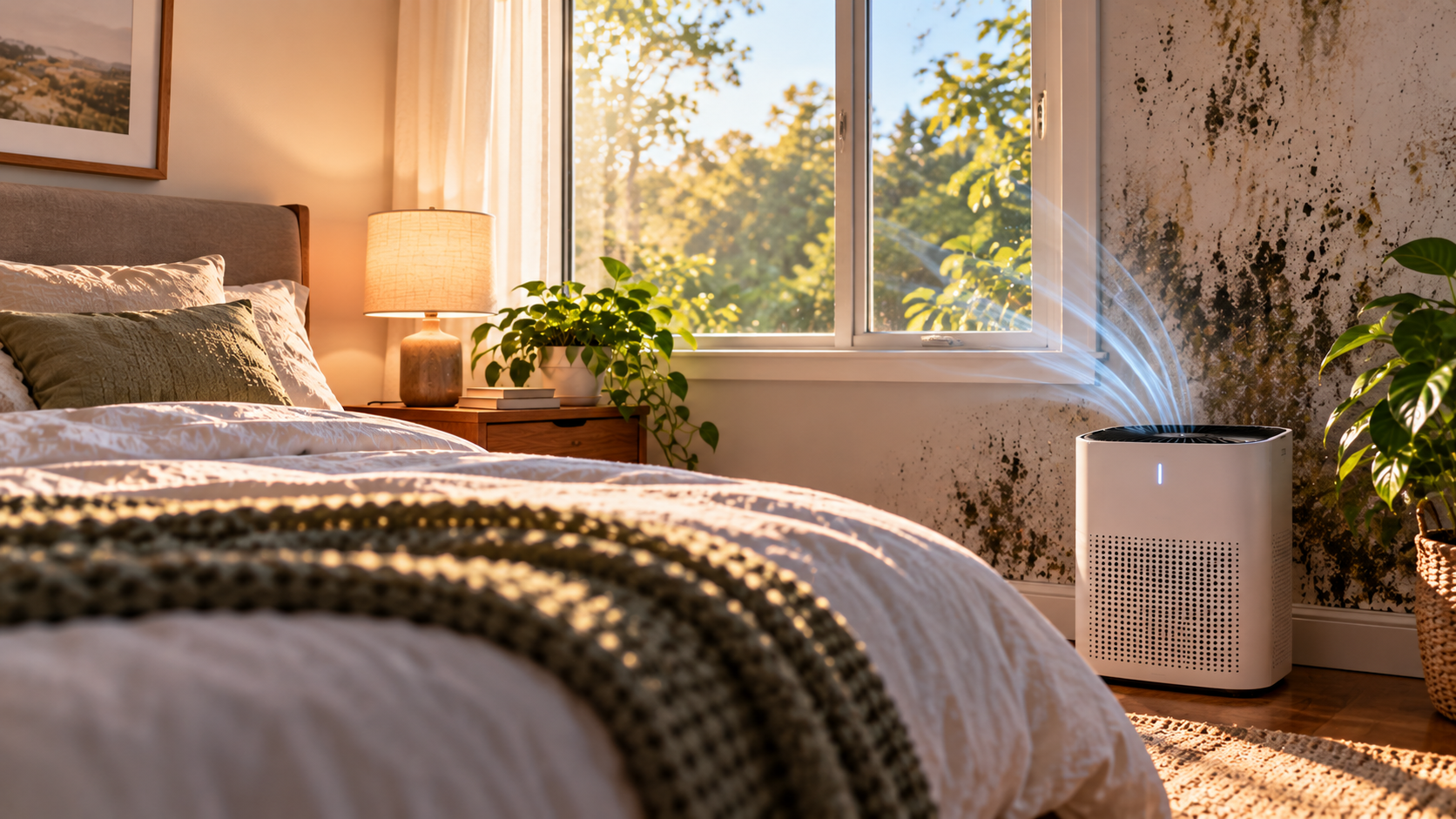
A portable HEPA air cleaner may reduce some airborne particles and spores, but it does not solve an active moisture problem. If mold continues growing behind a wall or beneath carpet, filtering the room air is not a substitute for removing the moisture source and remediating the damaged material.
Does Fixing a Damp Home Actually Help?
There is evidence that remediation can improve health, particularly respiratory health. A Cochrane review of 12 studies involving more than 8,000 participants found that repairing mold- and damp-damaged homes was associated with reductions in asthma-related symptoms and respiratory infections in adults, although the quality of the evidence varied and findings in schools were less consistent.[10]
A randomized trial involving children with asthma living in homes with indoor mold also found benefits from moisture-focused remediation. Homes in the intervention group received repairs designed to reduce water infiltration, remove water-damaged materials, and improve heating, ventilation, or air-conditioning conditions. Children in the remediation group experienced reductions in asthma-related morbidity compared with the control group.[15]
What has not been established as clearly is whether mold remediation by itself reliably improves sleep. That is a logical possibility, particularly if coughing, congestion, asthma, or allergies improve, but sleep-specific intervention trials remain limited. The evidence is therefore stronger for saying that dampness and mold are associated with sleep problems than for promising that removing mold will cure insomnia.
Conclusion
Mold may not be the first thing that comes to mind when thinking about the perfect sleep environment, but the condition of the building around your bed matters. Large studies have associated dampness and mold with insomnia symptoms, difficulty staying asleep, snoring, daytime sleepiness, and short sleep in both adults and children.[3,4,5,6]
The connection is probably not as simple as mold spores directly switching off sleep. Damp environments can worsen allergic rhinitis, asthma, coughing, congestion, and airway irritation, all of which can make restful sleep harder to achieve.[1,2,7,8,9] Other features of damp housing may contribute as well.
Fortunately, this is one environmental sleep problem where the central recommendation is straightforward: control the moisture. Fix leaks, dry wet materials quickly, manage humidity, and remove mold that is already growing.[1,2,11] If a bedroom smells musty or repeatedly develops mold, cleaning the surface is only half the solution; the more important question is what keeps allowing that surface to become wet.
A better night's sleep may start not just with keeping your bedroom cool, dark, and quiet, but also keeping it dry.


.png)
.png)